Source Automatic Candy Pillow Packing Machine for Candy Biscuit Chocolate
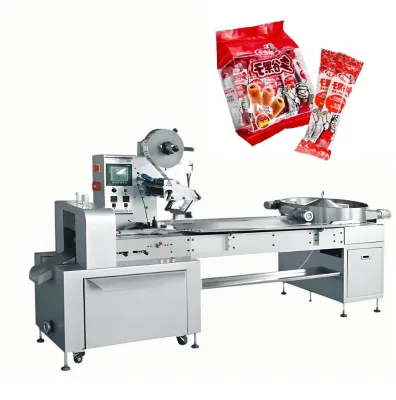
Compare 30 automatic candy pillow packing machines from verified suppliers in Zhejiang, Jiangsu, and Ningbo. These units offer capacities up to 1000 PCS/min, customizable film widths, and CE certification for sealing candy, biscuits, and chocolate.
Key considerations
Products List


Fld-Automatic Candy Pillow Packing Machine, Hard Candy Pillow Packing
$10000.00 - $30000.00
MOQ: 1 set

Automatic Candy Pillow Wrapping Machine Automatic Candy Pillow Packing Machine
$12000.00 - $15000.00
MOQ: 1 Set


Automatic Candy Packing Machine/Candy Pillow Packaging Machine
$9500.00 - $13000.00
MOQ: 1 Pieces
Xingjunyao Intelligent Packaging Technology (Taizhou) Co., Ltd

Hard Candy Pillow Packing Machine
$8000.00 - $11000.00
MOQ: 1 Pieces
Xingjunyao Intelligent Packaging Technology (Taizhou) Co., Ltd


Comprehensive Sourcing Guide
Strategic Sourcing Guide for Automatic Candy Pillow Packing Machines
Selecting an Automatic Candy Pillow Packing Machine requires a rigorous evaluation of technical capabilities, regulatory compliance, and operational efficiency. The global market for these machines is characterized by a wide variance in specifications, from high-speed servo-driven units to specialized models designed for specific film thicknesses and product dimensions. Buyers must navigate a landscape where observed data points, such as capacity ranges and power requirements, vary significantly between manufacturers. This guide provides a structured approach to evaluating suppliers and machines, ensuring that procurement decisions are grounded in verified facts rather than marketing assertions.
Technical Specifications and Operational Capabilities
The core of any pillow packing machine evaluation lies in its technical specifications. These parameters determine whether a machine can handle the specific physical properties of the candy product and the desired packaging materials. Based on observed market data, the maximum film width for viable units often centers around 250mm, with suitable film thickness ranges typically falling between 0.03mm and 0.06mm. These dimensions are critical for ensuring that the machine can accommodate standard pillow bag rolls without excessive waste or mechanical failure.
Capacity is another primary differentiator. Buyers should expect to see a broad spectrum of output rates, with observed ranges spanning from 250 to 320 pieces per minute up to 1000 pieces per minute. The highest capacity units, capable of 200 times per minute in specific packaging configurations or reaching 1000 pieces per minute, often utilize advanced servo motor technology. For instance, specific models are equipped with three servo motors, which provide precise control over the sealing and cutting processes, ensuring consistent bag lengths. The length of the bags produced can vary from 50mm to 330mm, while the packaging width is generally adjustable between 25mm and 100mm.
Power consumption and physical footprint are equally important for facility planning. Observed total power ratings for these machines range from 2.4kW to 3.5kW, typically operating on 220V electric power sources. The overall dimensions of the machinery are substantial, with some models measuring approximately 3500mm in length, 880mm in width, and 1550mm in height. Heavier units, weighing up to 980kg, require robust flooring and potentially reinforced foundations. When evaluating a specific machine, buyers must verify the forming function, which typically includes filling and sealing operations, and confirm the forming species, such as bag moulding, to ensure compatibility with the production line workflow.
Compliance, Certification, and Safety Standards
Navigating the regulatory landscape is essential for international procurement. While specific certification statuses can vary by manufacturer, the market frequently references standards such as CE, GMP, and SGS. These certifications indicate adherence to safety, quality, and manufacturing guidelines. For example, some units are explicitly listed with CE certification, which is a mandatory requirement for machinery sold within the European Economic Area. Additionally, ISOCE certification is observed in certain product listings, suggesting compliance with specific international quality management systems.
However, buyers must exercise caution when interpreting these labels. Not every machine in the category will possess every certification listed in a general search. The presence of a CE mark, for instance, should be verified against the specific model number and the manufacturer's documentation. Similarly, GMP (Good Manufacturing Practice) compliance is crucial for food-grade applications like candy and chocolate, ensuring that the machine materials and processes do not contaminate the product. Buyers should request current, valid certificates from the supplier rather than relying on general claims. The standard for machine dimensions and safety features should be cross-referenced with local regulations in the buyer's country of operation, as standards like 35007801480mm may refer to specific model footprints rather than universal safety limits.
Cost Drivers and Pricing Structures
Understanding the cost structure of automatic candy pillow packing machines is vital for budgeting and ROI analysis. The observed price range in the market is extensive, spanning from approximately $2,188 to $30,500. This wide variance is driven by several key factors, including the level of automation, the speed of operation, and the complexity of the control systems. High-speed machines with servo motors and advanced forming functions command a premium price compared to basic models.
The minimum order quantity (MOQ) is another cost consideration. Observed MOQs range from 1 to 25 units, indicating that buyers can often procure a single machine for pilot testing or small-scale production. However, bulk purchases may offer different pricing tiers. The total cost of ownership extends beyond the initial purchase price. Buyers must factor in the cost of the packaging material, which is typically film, and the energy consumption associated with the machine's power rating. Additionally, the packaging method for shipping, often a wooden case with a steel base or a safe packing configuration, adds to the logistics cost. The origin of the machine, whether from Zhejiang, Jiangsu, or Ningbo in China, can also influence the final landed cost due to varying shipping rates and import duties.
Typical Applications and Material Compatibility
Automatic candy pillow packing machines are designed for a variety of confectionery applications. The primary applications observed include candy, biscuits, and chocolate. These machines are versatile enough to handle solid materials, as indicated by the material type classification. The forming function is specifically tailored for filling and sealing, making them ideal for products that require a protective barrier against moisture and air.
The machine's ability to handle different shapes is a significant advantage. Packaging technical parameters often include the capability to produce oblong, quadrate, round, oval, and lollipop shapes. This flexibility allows manufacturers to diversify their product lines without investing in entirely new machinery. The process involved is typically thermal processing, which ensures a hermetic seal that preserves the freshness of the candy. When selecting a machine, buyers should verify that the forming species and sealing temperature controls are compatible with the specific type of candy being packaged. For instance, chocolate requires precise temperature control to prevent melting, while hard candy may require different sealing pressures.
Supplier Evaluation and Geographic Considerations
Evaluating suppliers requires a focus on their geographic origin and production capabilities. The observed data indicates that manufacturers are located in key industrial hubs in China, including Zhejiang, Jiangsu, and Ningbo. Each region may have different specializations and supply chain efficiencies. For example, Ningbo is a major port city, which can facilitate easier export logistics, while Zhejiang and Jiangsu are known for their dense manufacturing clusters.
When assessing a supplier, buyers should look for evidence of customization capabilities. Many machines offer customization options, allowing for tailored solutions to specific production needs. The product model numbers, such as the KD-Series, FLD-988E, YLDZ-2000, and DZB-898C, serve as unique identifiers that can be used to track the specific capabilities and history of a machine. Buyers should request detailed technical drawings and specifications for these models to ensure they meet the required standards. It is also important to verify the packaging technical parameters and the overall dimensions to ensure the machine fits within the available factory space.
Quality Control and Long-Term Procurement
Quality control is a continuous process that begins before the purchase and extends through the machine's lifecycle. Buyers should establish clear acceptance criteria based on the observed specifications, such as the weight of the machine, the total power rating, and the capacity in pieces per minute. Regular maintenance is essential to sustain the high-speed performance of servo-driven units. The use of a wooden case for shipping, often with a steel base, suggests a focus on protecting the machine during transit, but buyers should also inspect the internal components upon arrival.
Long-term procurement considerations include the availability of spare parts and the supplier's support infrastructure. Machines with a total power of 2.4kW or 3.5kW may require specific electrical components that are not universally available. Buyers should inquire about the lead time for replacement parts and the technical support offered by the supplier. The certification status, such as CE or ISOCE, should be maintained throughout the machine's life, and any updates or renewals should be managed proactively. By focusing on these factors, buyers can ensure a reliable and efficient operation of their automatic candy pillow packing machines, minimizing downtime and maximizing production output.
Comparative Analysis of Machine Models
To assist in the decision-making process, the following table summarizes key observed specifications for different machine models found in the market. This comparison highlights the variance in capacity, power, and dimensions, aiding buyers in selecting the most appropriate unit for their specific needs.
| Feature | Model A (KD-Series) | Model B (FLD-988E) | Model C (YLDZ-2000) | Model D (DZB-898C) |
|---|---|---|---|---|
| Max Film Width | 250mm | Not Specified | Not Specified | Not Specified |
| Capacity | 200 times/Min | 1000 PCS/Min | 250-320 PCS/Min | Not Specified |
| Total Power | 2.4kw 220V | 3.5kw | Not Specified | Not Specified |
| Weight | 500kg | 980kg | Not Specified | Not Specified |
| Dimensions (LWH) | 35008801550mm | 35007801480mm | 3000x1350x1450mm | Not Specified |
| Origin | Zhejiang | Jiangsu | Ningbo | Ningbo of China |
| Certification | ISOCE, CE | CE | CE | CE |
| Application | Candy | Candy, Biscuit, Chocolate | Candy | Snack |
| Packaging | Wooden Case | Wooden Case with Steel Base | With Wooden Case | Safe Packing |
This table illustrates the diversity in the market. While Model B offers the highest capacity at 1000 PCS/Min, it also has a higher weight and power requirement. Model A, with its 500kg weight, may be more suitable for facilities with space or load-bearing constraints. Buyers must carefully weigh these factors against their production goals and facility limitations. By adhering to these evidence-based guidelines, procurement teams can make informed decisions that align with their operational requirements and budgetary constraints.
FAQs
What is the capacity range for these machines?
Capacity ranges from 250 to 1000 pieces per minute depending on the model. Some units achieve 200 times per minute in specific configurations while others reach up to 1000 PCS per minute using servo motors.
Which certifications are commonly available for these machines?
Common certifications include CE, GMP, SGS, and ISOCE. Buyers should verify specific model documentation as not every unit possesses every listed certification, though CE is frequently observed for European compliance.
Can the machine handle different bag shapes?
Yes, the machines can produce oblong, quadrate, round, oval, and lollipop shapes. This flexibility allows manufacturers to diversify product lines without investing in entirely new machinery for different packaging forms.
What is the typical power consumption for these units?
Total power ratings typically range from 2.4kW to 3.5kW operating on 220V electric power. Higher capacity models often require the 3.5kW rating to support advanced servo motor technology and faster speeds.
Which applications are these machines suitable for?
These machines are suitable for candy, biscuits, chocolate, and snacks. They are designed for solid materials and utilize thermal processing to ensure a hermetic seal that preserves product freshness.
What are the standard dimensions for these machines?
Overall dimensions vary by model, with some measuring 3500mm by 880mm by 1550mm. Other models may have dimensions around 3000mm by 1350mm by 1450mm, requiring careful factory space planning.